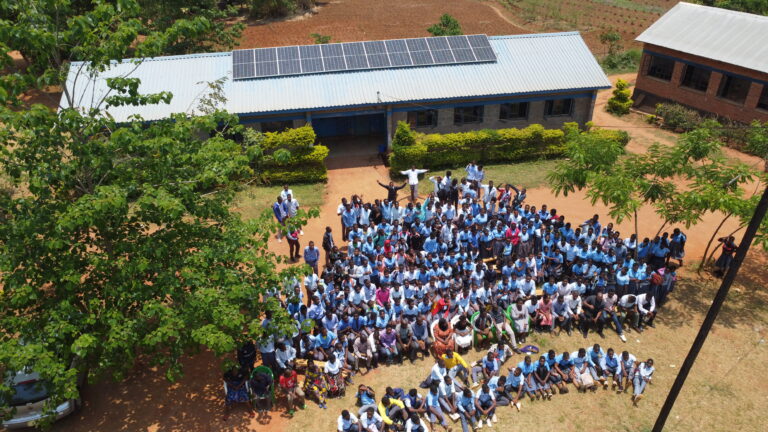
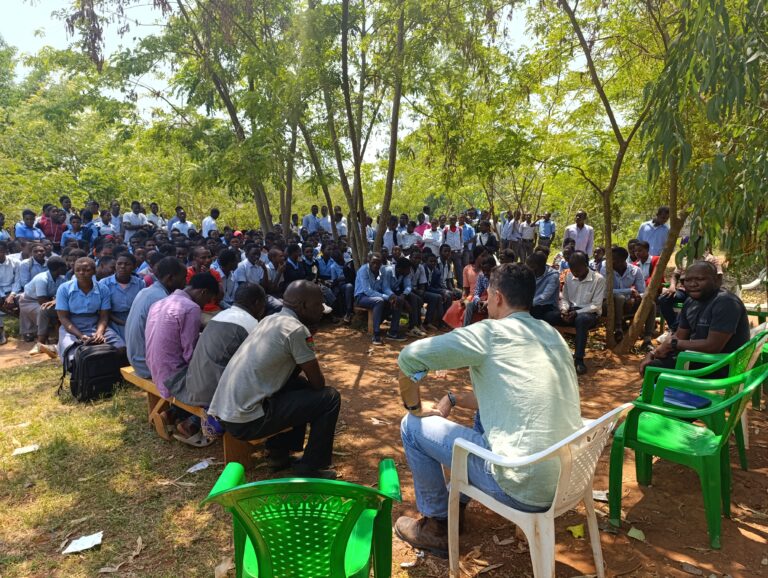
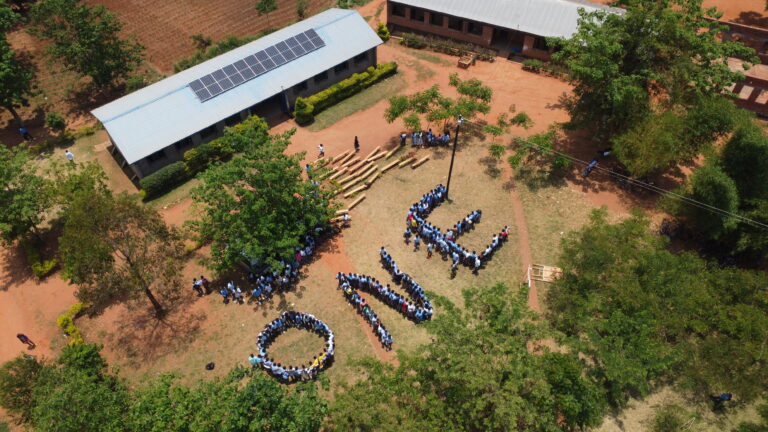
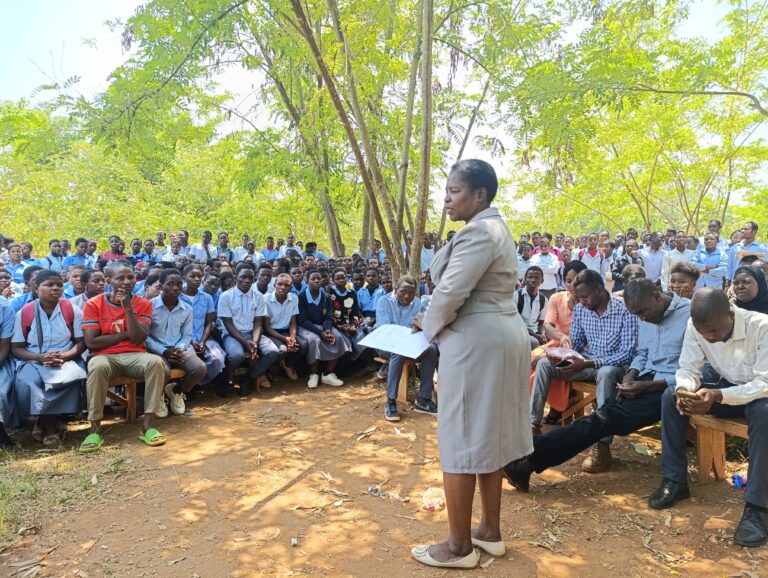
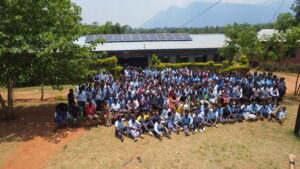
Chisambe Community Day Secondary School, located in the remote Mulanje District of southern Malawi, was established in 2019 and currently serves more 290 students. Since its inception, the national examination’s pass rate has fluctuated between 23% and 59%, reflecting the broader challenges faced by learners in a low-resource environment. One of the most significant barriers to improved academic outcomes has been the lack of reliable electricity.
Project summary
THE NEED
The School faced major disruptions after Cyclone Freddy destroyed the electricity infrastructures, leaving the school without power for eight months. Even when having the national grid connection, the electricity was unreliable, affecting both learning and administration. Students could not study at night or conduct practical lessons, while staff were forced to travel long distances to prepare exams. Girls were particularly disadvantaged due to limited study time and safety concerns.
The solution
A 5.4 kWp solar system with 5 kWh battery storage has been installed to provide a stable and reliable power source. The system powers lighting, labs, and administrative tasks, supports future computer studies, and enables girls to self-board and study at night in a safe environment.
Impact
The solar system has improved academic performance by enabling extended study hours, reduced administrative burdens by eliminating travel costs, and created better learning opportunities, especially for girls. It also builds the school’s resilience against power disruptions and supports SDGs 4 and 7.
Impact story
Chisambe CDSS Lights up with Solar
“This solar project has transformed our school. We used to struggle with costly and time-consuming efforts to access services that required electricity. Now, we have power every day, which will greatly improve our students’ education; they can now study in the evenings, and when the library and labs are ready, they will have access to computers and other tools for…”