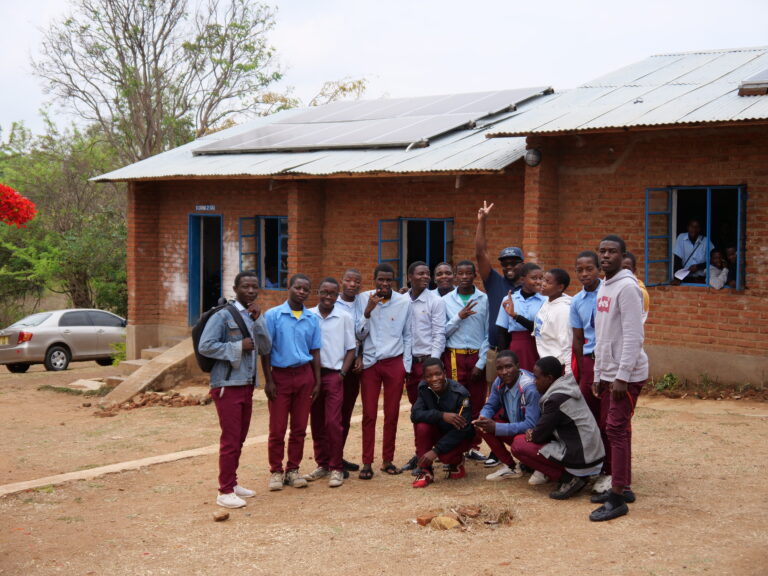
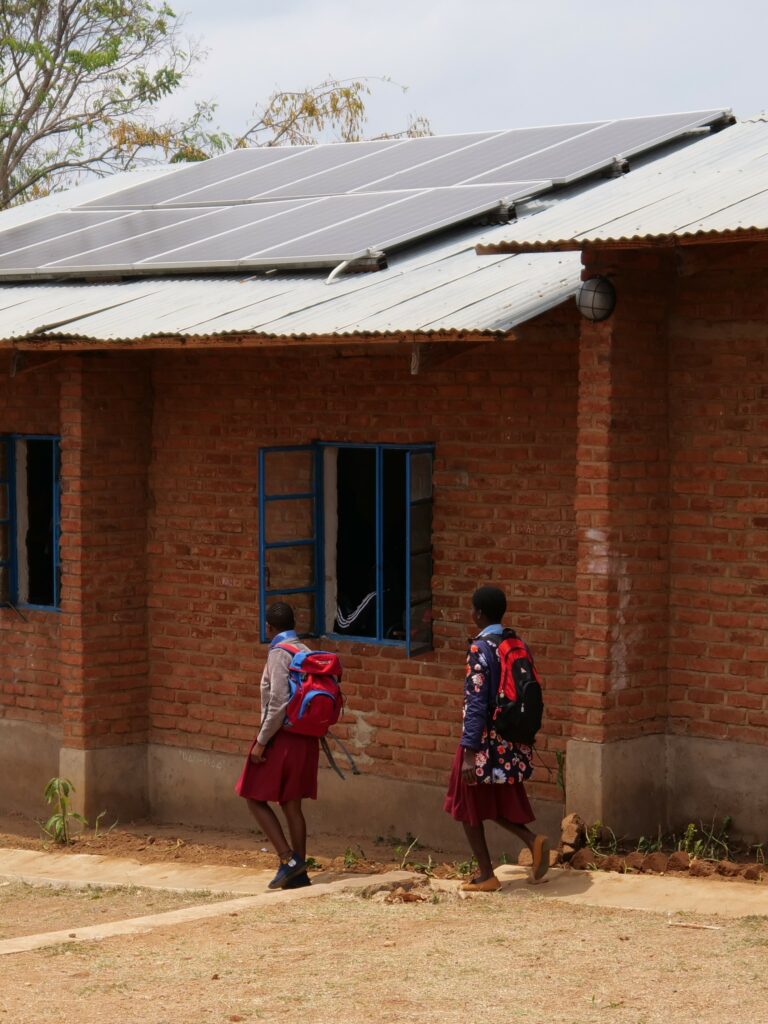
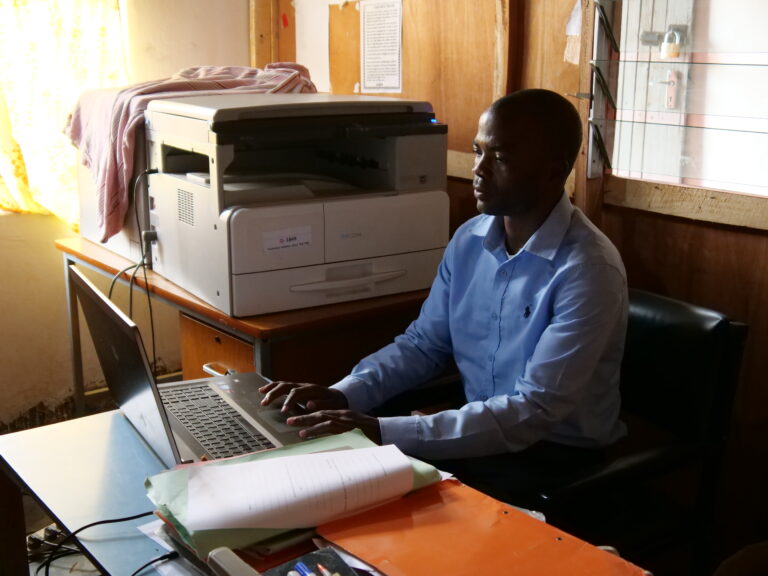
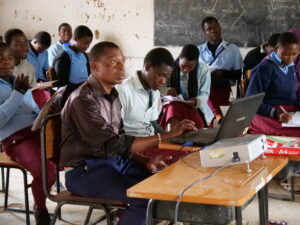
Likwenu Community Day Secondary School, is located along the M3 road in Machinga District, the school faced challenges due to the lack of access to the national electricity grid. This hindered academic progress and administrative efficiency. The implementation of a solar power system has transformed the school and enabled the use of modern educational technologies such as computers and projectors.
Project summary
THE NEED
Before the solar power intervention, Likwenu Community Day Secondary School operated without access to the national electricity grid. This lack of electricity severely hindered academic progress, limited study results, and made administrative tasks difficult for both teachers and staff. The absence of modern educational technologies also impeded the quality of education provided to the students.
The solution
To address the challenges, a solar power system was installed at Likwenu Community Day Secondary School. This system brought electricity to the classrooms, enabling teachers to utilize projectors, computers, and other supportive appliances. The availability of reliable power has allowed the school to integrate modern educational technologies, enhancing the learning experience and administrative efficiency
Impact
The impact of electrifying Likwenu Community Day Secondary School was immediate. The availability of electricity has elevated the quality of education, leading to improved study results. In 2022, Likwenu was recognized as the best-performing community day secondary school in Machinga District. This project not only bridged educational gaps but also empowered the entire community, showcasing the transformative power of access to electricity
Impact story
Solar Impact at Likwenu
“The impact was immediate and profound; the electrification not only elevated the quality of education but also led to improved study results. Likwenu was recognized as the best-performing community day secondary school in Machinga District in 2022. This intervention displays the transformative power of a simple yet crucial solution. Access to electricity has not only bridged educational gaps but also…”